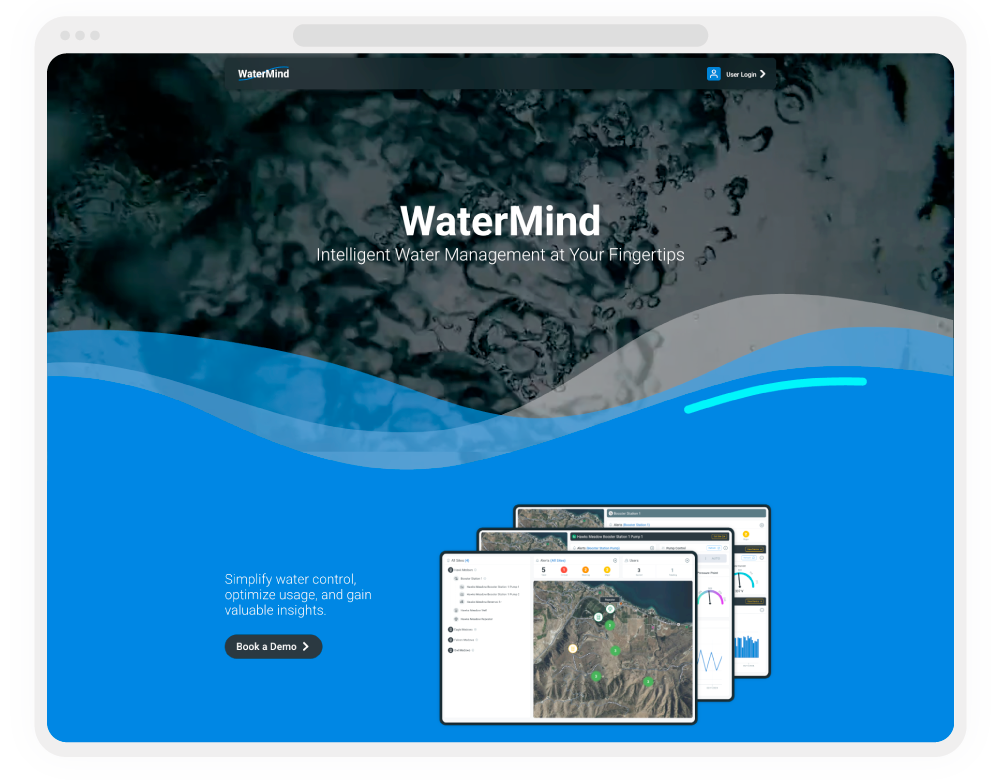
How We Built an Automated, Device-Agnostic Smart Irrigation IoT Platform.
Software Development
WP Development
UX/UI Design
Web Design
AWS integration
Automated Testing
The goal was to seamlessly ingest live data from thousands of field devices—including industrial water pumps, deep wells, and environmental sensors. While the industry-standard ThingsBoard IoT platform offered strong backend device management, its native UI framework presented a major roadblock: dashboards had to be built manually for every new client, and the interface lacked the premium user experience (UX) required for modern enterprise software.
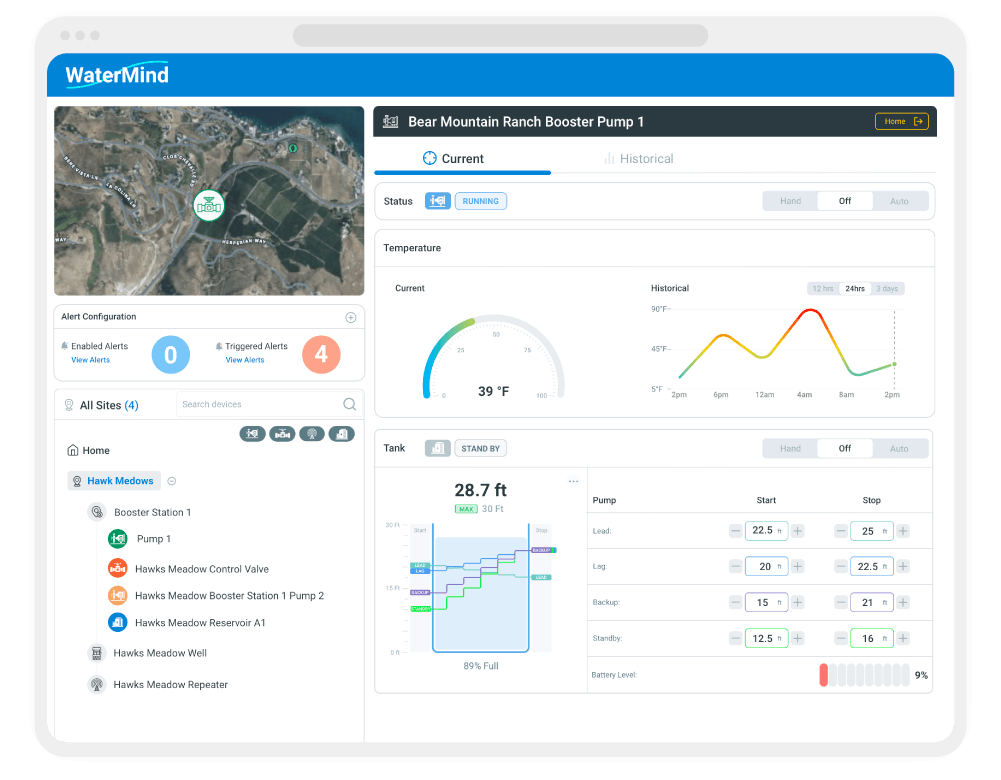
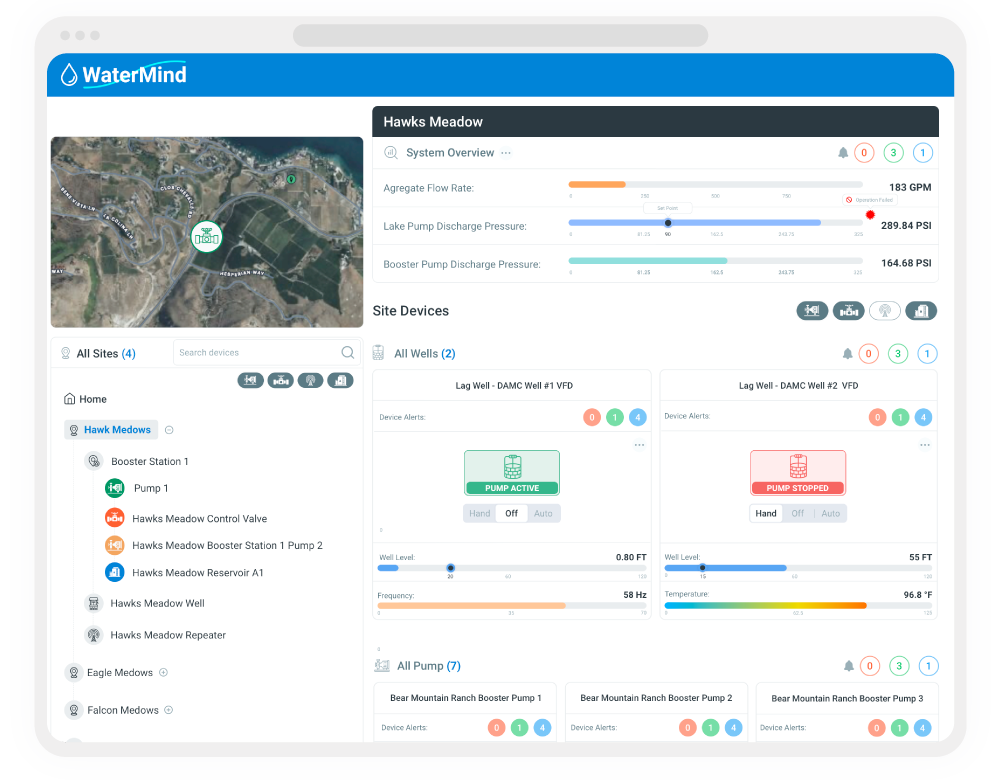
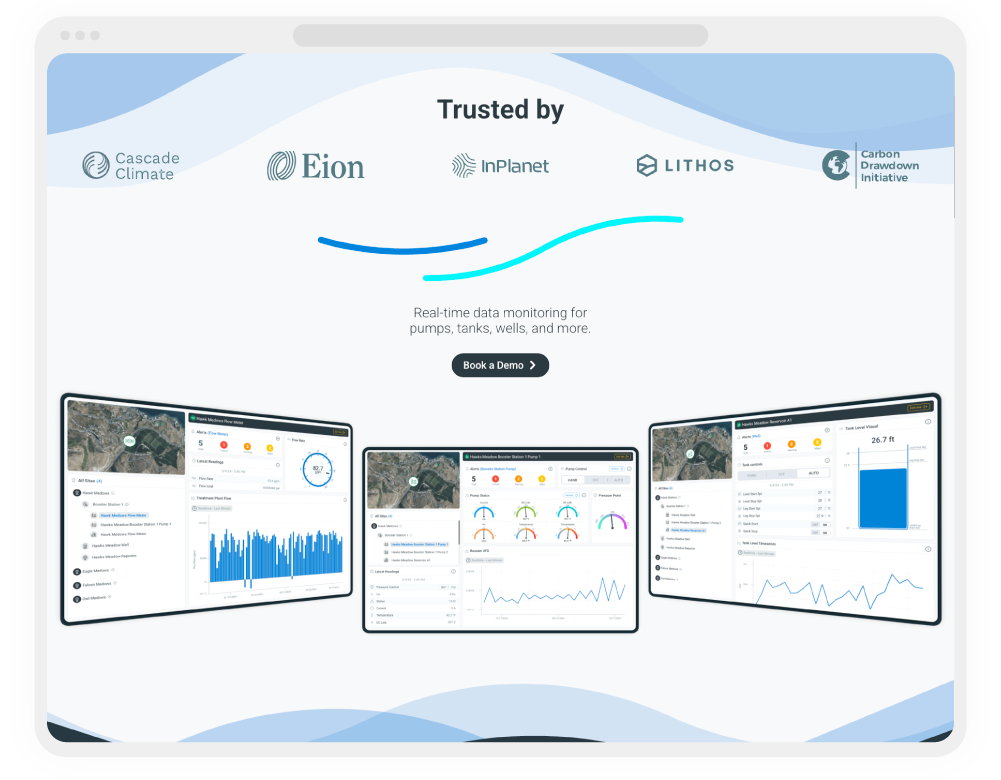
To solve this, our team engineered a custom, automated Angular frontend layered over ThingsBoard. Leveraging advanced ThingsBoard extensions and a highly resilient AWS data pipeline, we eliminated manual setup completely. We developed a “smart dashboard” that automatically detects, parses, and dynamically renders data streams from any industrial hardware (such as Red Lion edge controllers). The resulting platform allows end-users to provision new devices instantly, utilize intelligent system-level tags, and create custom data tags on the fly.
Watermind Web App UI
Current Device Detail Dashbaord
Site Dashbaord
Challenges
1. The Scaling Bottleneck: Manual Dashboard Provisioning
Out of the box, ThingsBoard requires developers or admins to manually drag, drop, and configure dashboard widgets for every single client account and device profile. For Watermind to scale to thousands of users, this approach was a logistical nightmare. Furthermore, the native UI aesthetics didn’t meet the high visual standards of today’s enterprise web applications.
2. Device Heterogeneity & Telemetry Variety
Irrigation hardware is diverse. Telemetry packets arrive in different structures depending on whether they come from a pump flow-meter, a well water-level sensor, or industrial automation software like Red Lion. The system needed a way to ingest any arbitrary data payload without crashing the UI or requiring hardcoded schema updates.
Watermind Web App UI
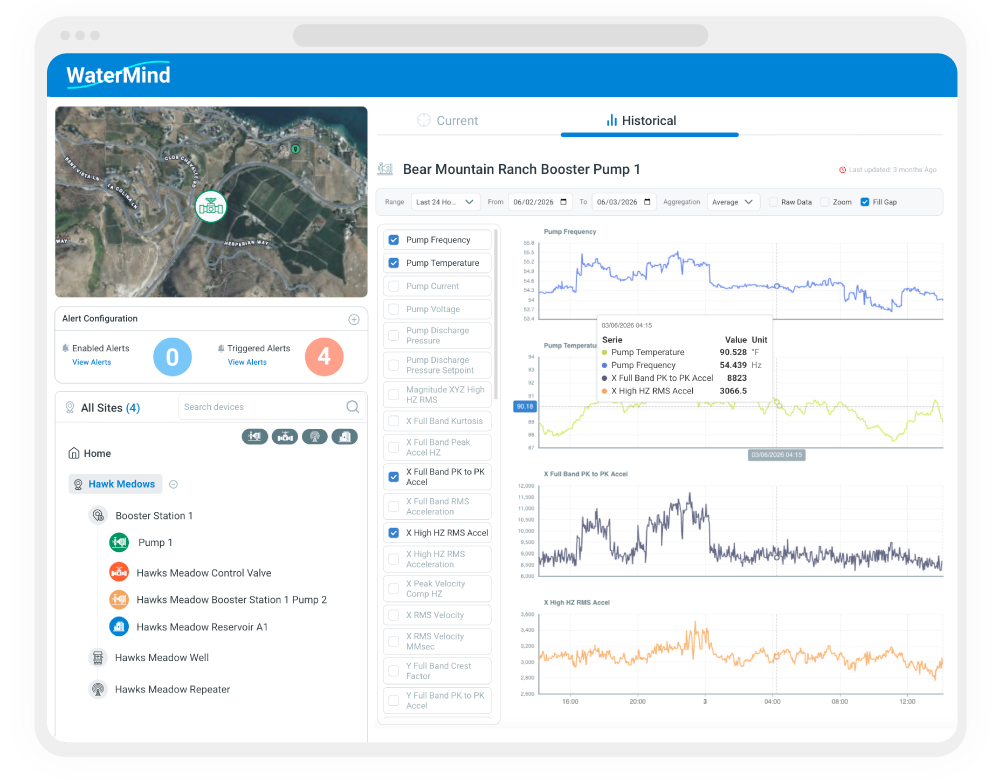
Device Historical Detail Dashboard
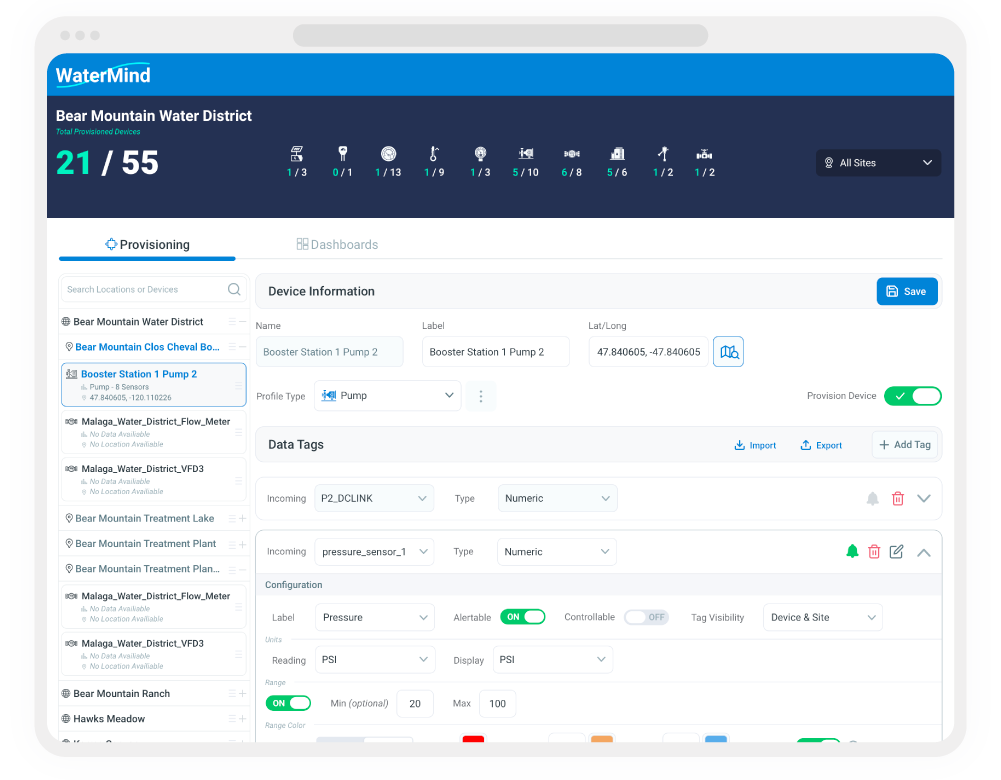
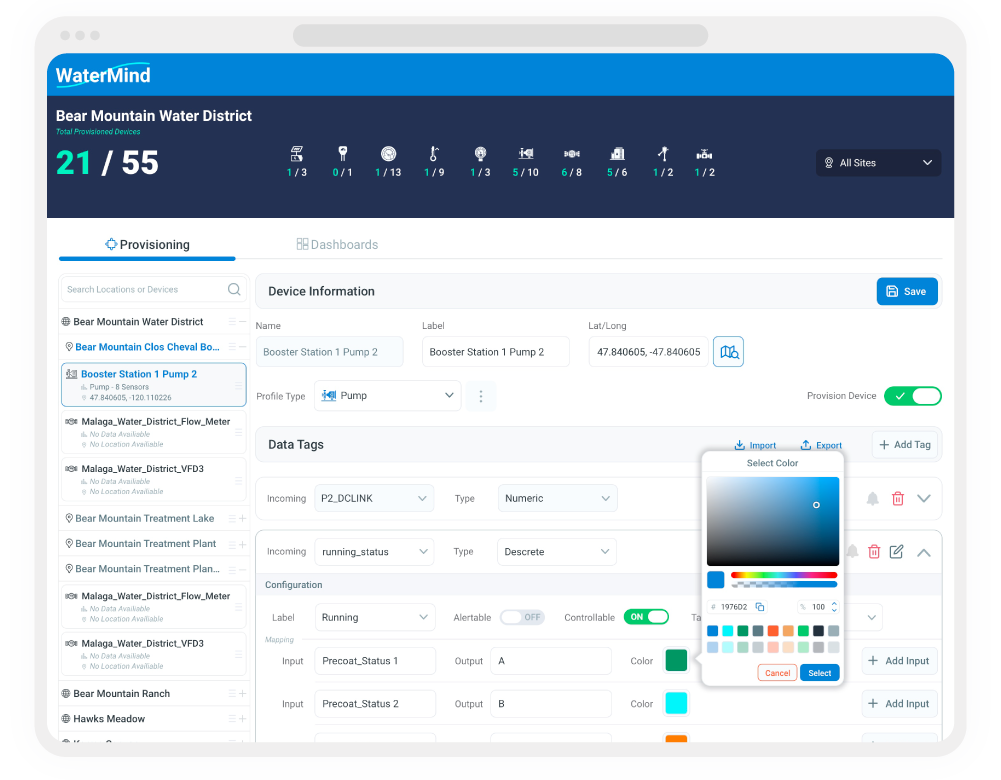
Device Provisioning Dashboard – Numeric Tag
Process & Engineering Solution
Step 1: Breaking the UI Chains with a Custom Angular Frontend
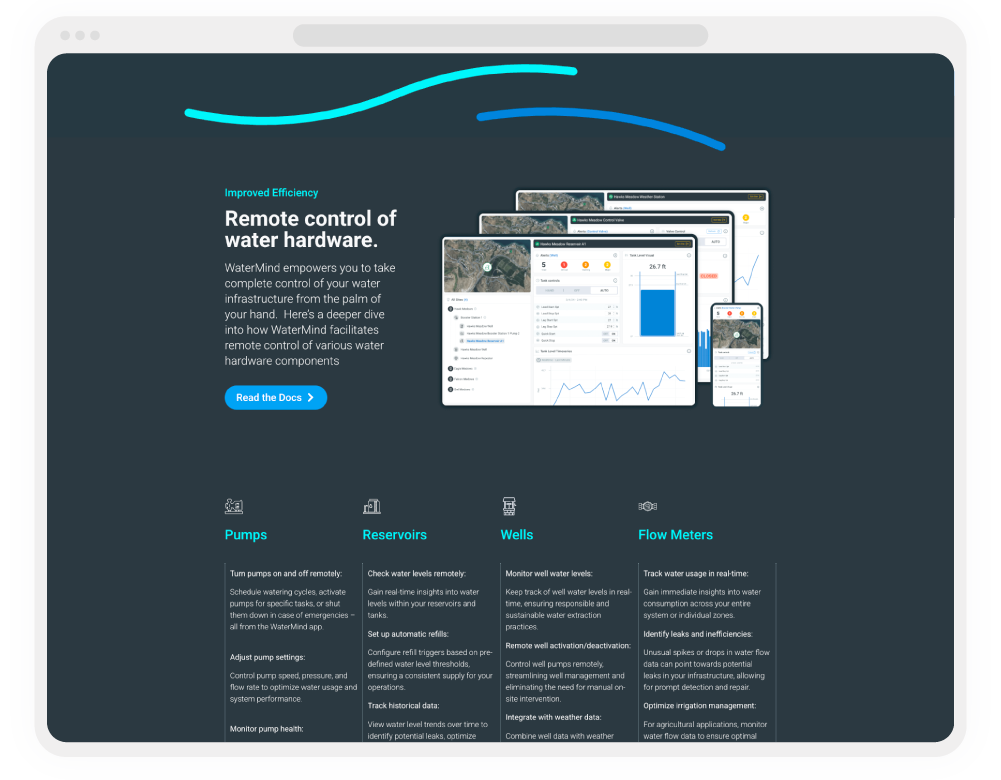
We bypassed ThingsBoard’s standard visual layer entirely, using it strictly as a headless IoT engine. We engineered a bespoke frontend application using Angular, creating a highly polished, interactive UI. To bridge the gap, we tapped into ThingsBoard extensions and REST APIs, allowing our Angular application to manipulate device layouts programmatically.
Step 2: The Self-Assembling “Smart Dashboard”
Instead of building static views, we designed a dynamic, metadata-driven architecture. When a user logs in, the custom dashboard queries the device’s capabilities and builds itself automatically.
System Tags: Pre-configured system tags automatically map and render standard irrigation metrics (e.g., flow rate, PSI pressure, RPMs).
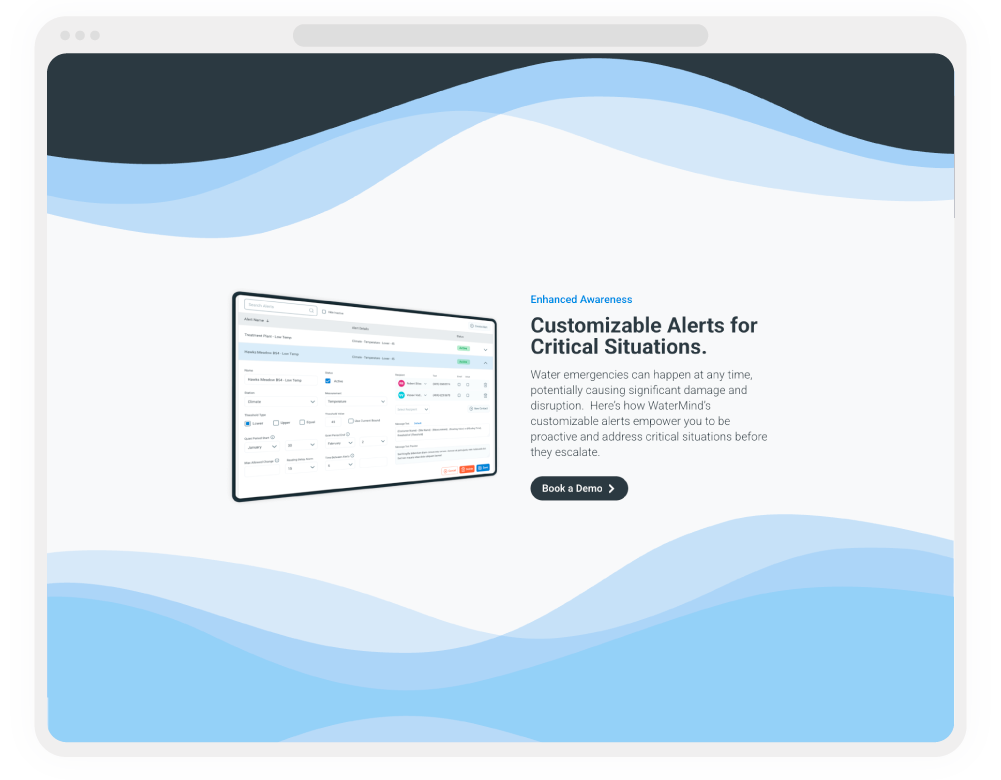
Custom User Tags: If a client hooks up a niche sensor, they can define their own tags during runtime provisioning. The dashboard recognizes the new data type instantly and renders a corresponding card or graph without requiring a single line of new code.
Step 3: Architecting a High-Throughput AWS Ingestion Pipeline
To process the flood of incoming messages from Red Lion software and edge gateways without dropping packets, we built a decoupling layer on Amazon Web Services (AWS).
Edge Transmission:(Red Lion Software.)
Industrial hardware streams raw telemetry data from field pumps and wells using the Red Lion protocols.
Queue Ingestion: (AWS Queue Management.)
Data packets are funneled into a resilient cloud message queue to prevent data loss during high-traffic spikes.
Queue Interception: (EC2 Data Interceptor.)
We deployed a custom-built data interceptor service running on Amazon EC2. This interceptor continuously polls and consumes the queue, scrubbing, normalizing, and formatting the raw payloads.
ThingsBoard Provisioning:(Data Delivery.)
The normalized data is pushed directly into the ThingsBoard backend, instantly triggering the reactive updates on the user’s Angular smart dashboard.
Watermind Web App UI
Device Provisioning Dashboard – Descrete Tag
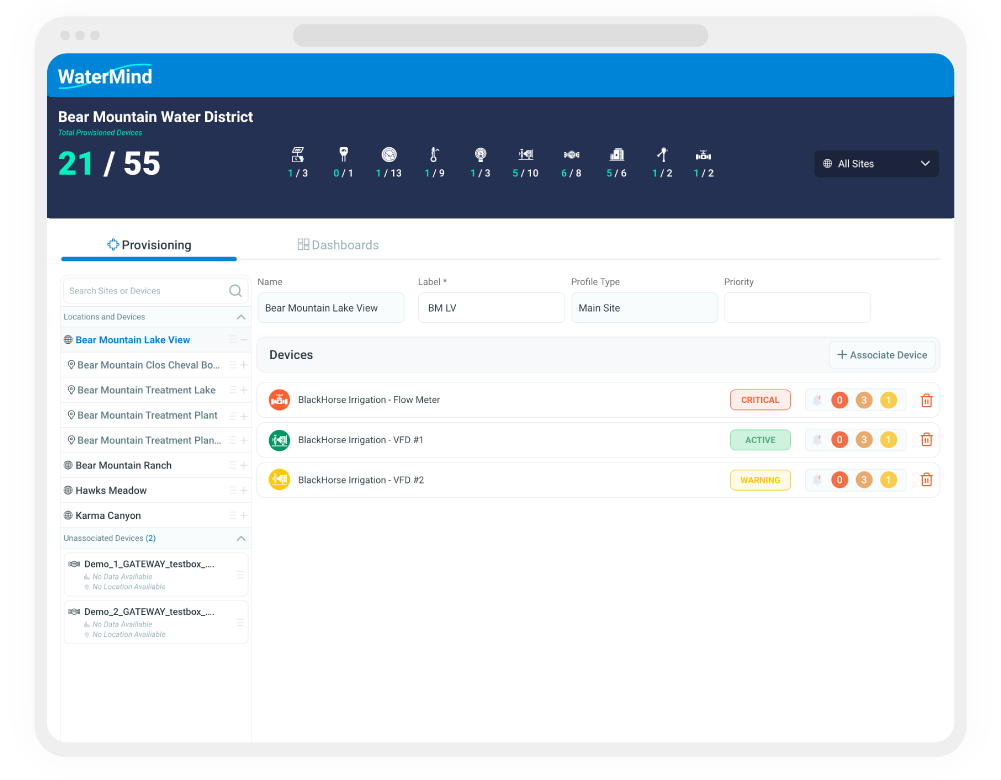
Site Provisioning Dashboard
Results
By combining our deep software engineering expertise with high-end digital design, we transformed Watermind’s core product into an enterprise-grade SaaS asset.
Zero Manual Setup: Dashboard creation dropped from hours per client to 0 seconds—fully automated by the software.
True Hardware Agnostic Ingestion: Watermind can pitch to any client using any irrigation device type, knowing the platform can safely ingest and map the data.
Premium UX Differentiation: The sleek Angular interface gave Watermind a massive competitive edge in a traditionally outdated agricultural tech market.